

 Introduction
For internationally qualified nurses preparing for the Australian OSCE, demonstrating competence in vital signs measurement is critical. This station isn’t just about checking numbers — it’s about safe, patient-centered practice. In this guide, we’ll walk you through everything you need to know to master the Vital Signs station with confidence.
 Why Vital Signs Matter in the OSCE
Vital signs are the foundation of clinical assessment and patient safety. The assessor is not just checking if you can take a blood pressure — they are observing how you perform hand hygiene, how you communicate with the patient, and how you act on abnormal findings.
 OSCE Vital Signs Measurement: Competency Checklist
Follow this structured checklist when practicing to ensure you meet Australian clinical standards:
 Before You Begin
-
☐ Check for hazards in the environment.
-
☐ Perform hand hygiene.
-
☐ Introduce yourself and your role.
-
☐ Confirm patient identity using three identifiers (Full name, DOB, MRN).
-
☐ Provide privacy.
-
☐ Explain the procedure in simple language.
-
☐ Confirm the patient has not eaten, drunk hot/cold drinks, smoked, or exercised recently.
-
☐ Gain verbal consent.
-
☐ Prepare and clean equipment (confirm calibration).
-
☐ Perform hand hygiene again.
 Respiratory Rate
-
☐ Position patient upright or lying comfortably.
-
☐ Perform hand hygiene.
-
☐ Place fingers on the radial pulse and discreetly observe chest movement.
-
☐ Count respirations for 30 seconds (60 if irregular).
-
☐ Note rate, depth, and quality.
-
☐ Perform hand hygiene.
 Oxygen Saturation (SpO₂)
-
☐ Select a warm, clean site with good circulation.
-
☐ Remove nail polish or artificial nails.
-
☐ Position hand at heart level.
-
☐ Attach the probe, turn on the device, and observe waveform.
-
☐ Match displayed pulse with actual pulse.
-
☐ If low, position upright and apply oxygen as prescribed.
-
☐ Clean and disinfect probe after use.
-
☐ Perform hand hygiene.
-
☐ Document findings.
 Heart Rate
-
☐ Perform hand hygiene.
-
☐ Position patient comfortably.
-
☐ Use index and middle fingers to palpate radial artery.
-
☐ Count for 30 seconds (60 if irregular).
-
☐ Assess rhythm and amplitude.
-
☐ Perform hand hygiene.
-
☐ Document findings.
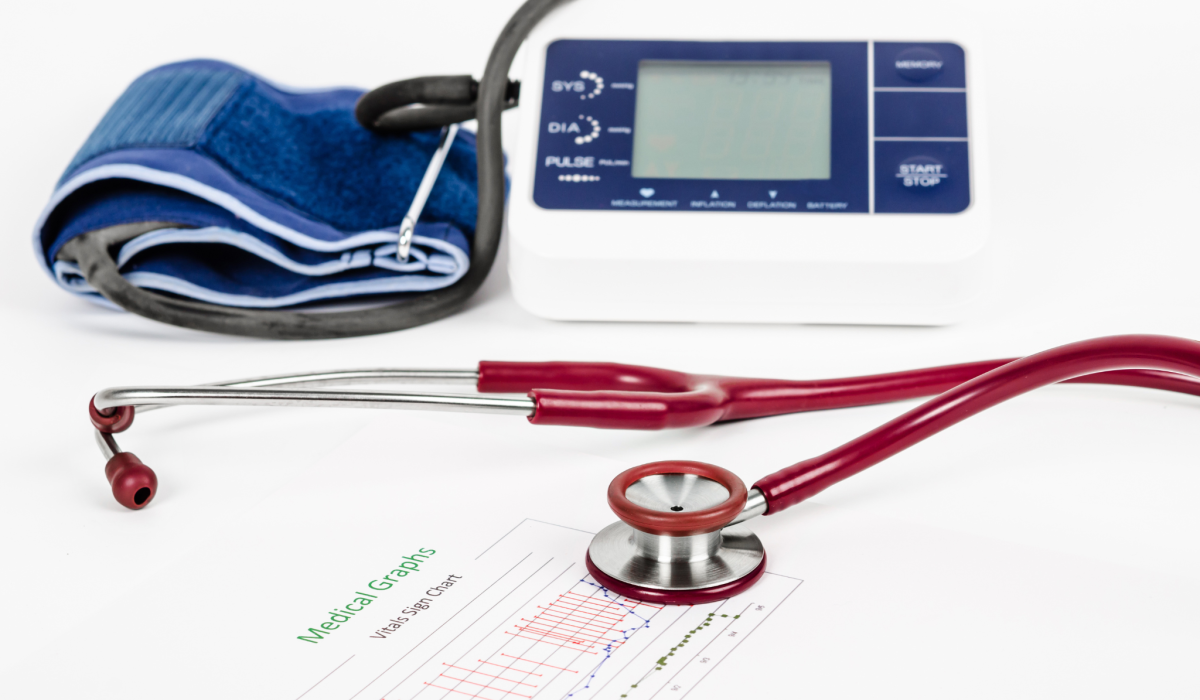
 Blood Pressure (Manual)
-
☐ Ensure patient is relaxed, seated, with arm supported and legs uncrossed.
-
☐ Expose arm; apply cuff 2.5 cm above the elbow crease.
-
☐ Confirm cuff sizing (80% of arm circumference).
-
☐ Check gauge is at zero.
-
☐ Palpate radial pulse, inflate until pulse disappears, note reading.
-
☐ Rest arm 1 minute.
-
☐ Place stethoscope, inflate 20–30 mmHg above palpated systolic.
-
☐ Deflate slowly, note 1st (systolic) and 5th (diastolic) Korotkoff sounds.
-
☐ Remove cuff, assess skin.
-
☐ Disinfect cuff and stethoscope.
-
☐ Perform hand hygiene and document.
 Tympanic Temperature
-
☐ Check ear for obstructions or recent headwear. Wait 20 mins if needed.
-
☐ Use clean probe cover.
-
☐ Lift ear (up and back for adults), insert probe gently.
-
☐ Activate and read temperature.
-
☐ Dispose of probe cover, clean thermometer.
-
☐ Perform hand hygiene.
-
☐ Document and explain result to patient.
 Final Tips for OSCE Day
-
Verbalize everything during the station — your reasoning and actions matter.
-
Practice with a partner using this checklist until it becomes second nature.
-
Stay calm — assessors are looking for safe, systematic care, not speed.