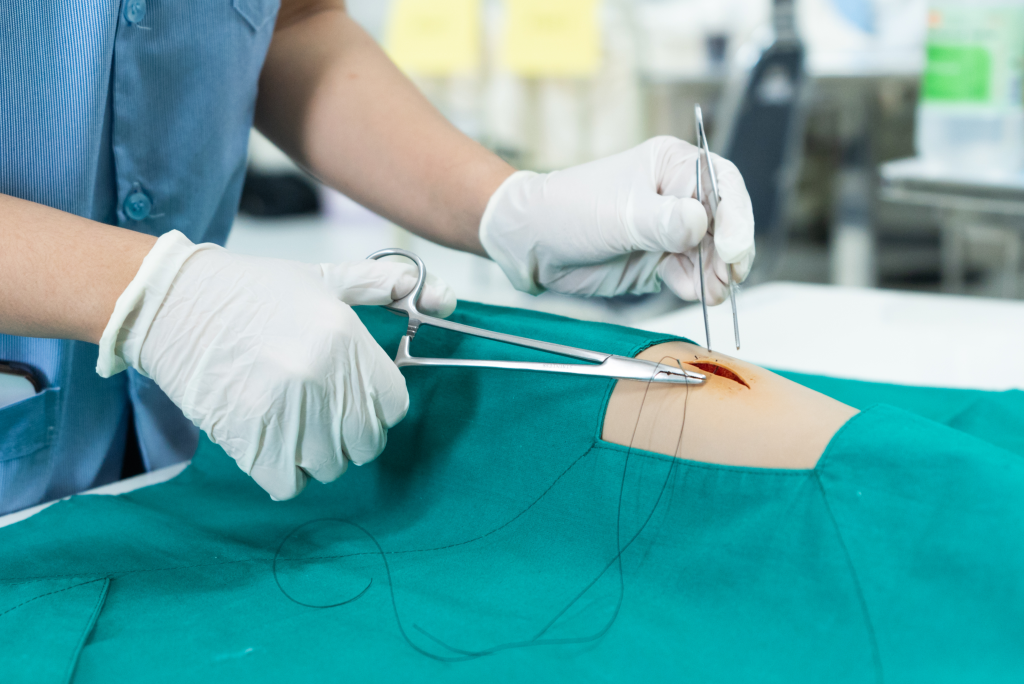



The OSCE, or Objective Structured Clinical Examination, can be one of the most nerve-wracking parts of becoming a registered nurse or midwife — but it doesn’t have to be. With the right preparation and mindset, you can walk into your exam with confidence and walk out with success.
If you’re an internationally qualified nurse or midwife (IQNM) preparing to practice in Australia, passing the OSCE is a crucial step in your journey. The exam is part of the Outcome-Based Assessment (OBA) pathway overseen by the Nursing and Midwifery Board of Australia (NMBA).
The OSCE assesses your clinical and communication skills in a simulated, real-world environment to ensure you’re safe and competent to practice in the Australian healthcare system.
Here are my top 10 tips, specifically written for IQNMs preparing for the Australian OSCE. These strategies are designed to build your confidence, sharpen your clinical skills, and help you feel prepared — not panicked — on exam day.
1.  Understand the Australian OSCE Structure and Standards
Unlike what you may have experienced in your home country, the Australian OSCE focuses on safe, person-centred, and evidence-based care, guided by the NMBA Registered Nurse or Midwife Standards for Practice.
The exam consists of 10 stations
Registered Nurses (RN): 8 minutes of performance time + 2 minutes reading time
Registered Midwives (RM): 10 minutes of performance time + 2 minutes reading time
Example: You might be asked to perform wound care, administer intramuscular medication, or provide health education — all in line with Australian guidelines.
Familiarise yourself with what’s expected at each station. Knowing the format is half the battle.
2.  Align with NMBA Standards for Practice
Everything you do in the OSCE must align with the NMBA standards. These include:
-
Applying critical thinking and analysis
-
Providing safe, appropriate, responsive care
-
Working collaboratively
-
Maintaining the capability for practice
Example: When giving medication, you’re expected to check allergies, educate the patient, obtain consent, administer safely, and document — reflecting the NMBA’s standards.
Study these standards as if they were the rules of the game — because they are.
3.  Speak the Language — of Health with Empathy
Effective communication is key — and not just English fluency. The Australian healthcare system values clear, respectful, and culturally sensitive communication.
Example: Instead of saying “You must take this medication,” say “Let’s talk about how you can fit this medicine into your daily routine.”
Practice using plain English, actively listening, and involving the patient in decisions.
4.  Master Infection Prevention And Control (IPAC)
Australia has strict IPAC protocols. If you don’t follow them correctly, you risk failing the station — even if your clinical skill is perfect.
This includes:
-
Performing hand hygiene at key moments
-
Correct use of PPE
-
Aseptic technique
-
Safe handling and disposal of sharps and waste
Example: If asked to perform wound dressing, verbalise your hand hygiene steps, wear correct PPE, and maintain asepsis throughout.
Make these practices automatic — assessors are watching closely.
5.  Focus on High-Yield Skills
Some OSCE stations appear more frequently than others. Focus your study on these core areas:
-
Vital signs and physical assessments
-
Medication administration (oral, subcutaneous, IM)
-
Wound dressing (ANTT)
-
Basic Life Support
-
Mental health and patient communication
-
CPR and basic life support
-
Clinical handover (ISBAR)
Example: You may be asked to give insulin. Know the signs of hypoglycaemia, proper technique, and how to educate the patient post-injection.
Prioritise stations that reflect common, high-risk clinical tasks.
6.  Manage Your Time Wisely
You’ll have 2 minutes to read and 8 minutes to act. That’s not much — so practice being efficient.
Example: Use reading time to identify patient needs and safety concerns. As soon as you enter, introduce yourself, verify ID, get consent, and start the task with a clear plan.
Use a stopwatch during practice. Learn to prioritise safety and communication over perfection.
7.  Be Person-Centred, Always
Australian healthcare is deeply person-centred. This means:
-
Introducing yourself and your role
-
Respecting cultural and personal values
-
Asking permission before touching
-
Providing privacy and dignity
Example: For a patient with limited English, acknowledge their language needs and offer interpreter services — or ask how they’d like to be communicated with.
This is not only ethical — it’s expected.
8.  Own Your Mistakes and Recover Safely
Everyone slips up. What matters is how you handle it.
If you realise you’ve made an error:
-
Acknowledge it
-
Correct it safely
-
Continue confidently
Example: “I realise I skipped confirming allergies. I will stop here and check for allergies now before continuing.”
Demonstrating safe, honest recovery can earn you more marks than pretending everything went smoothly.
9.  Use Australian Clinical Guidelines
Australian practice is based on national guidelines. Reference them in your actions or explanations.
Useful resources include:
-
NMBA standards
-
Clinical Excellence Commission (CEC)
-
Therapeutic Guidelines (e.g., for antibiotics)
-
MIMS or Australian Medicines Handbook (AMH)
Example: If educating a patient on hypertension, align your advice with Heart Foundation guidelines or local protocols.
Using evidence shows you’re ready to work in Australia.
10.  Practice With Feedback — Then Practice Again
OSCE is a skill-based exam. To improve, you must practice regularly, reflect on your performance, and correct your mistakes.
Example: After each mock station, ask:
-
What did I do well?
-
What could I improve?
-
What would I do differently next time?
Use peer feedback, OSCE trainers, or video recordings. Every repetition builds confidence and skill.
 Final Thoughts
As an internationally qualified nurse or midwife, the OSCE may feel like a mountain to climb — but it’s also your gateway to a rewarding career in Australia.
With the right support, consistent practice, and belief in yourself, you can pass — and thrive.